
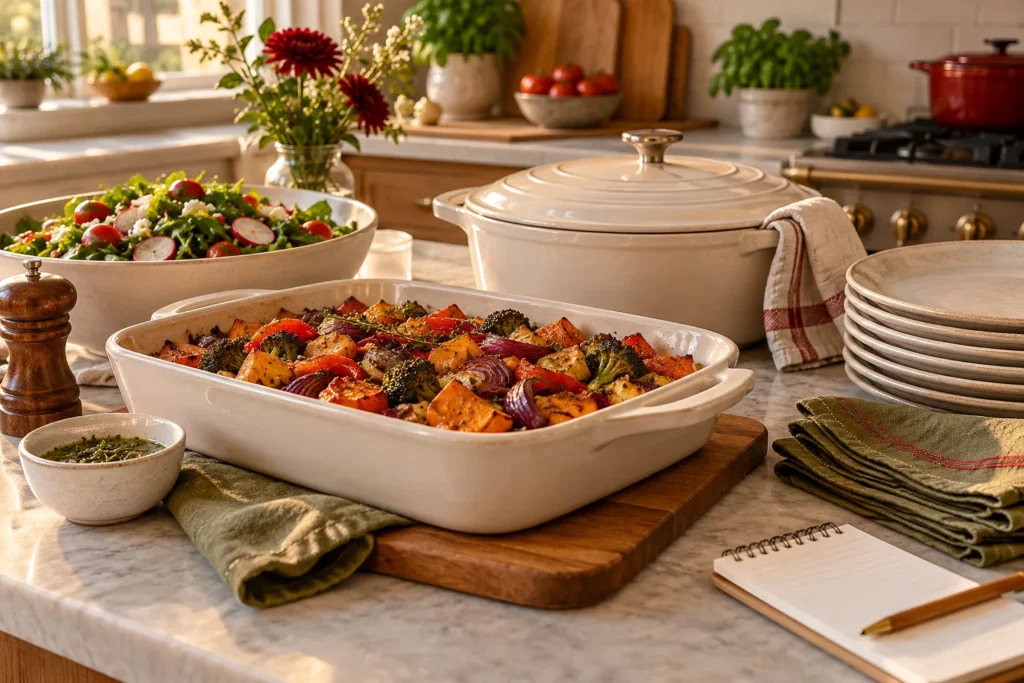
A relaxed evening around a table usually starts with decisions made before anyone arrives. The host needs food that can be served without constant trips to the kitchen, guests need a comfortable place to eat, and the menu needs enough flexibility for different appetites. A card game or board game adds one more practical detail: dinner and play often share the same surface.
That makes a modest, planned menu more useful than a long list of impressive dishes. Choose one main course, one fresh accompaniment, and something sweet that can wait until later. Give each dish a serving plan. The goal is an evening in which the food has a clear place and the people preparing it can sit down, too.
Start with the evening, then choose the food
Decide whether guests will eat a full meal before playing or take a break for supper. A meal before the game lets you clear plates and start with a clean table. A planned break works when the group wants a shorter first round and the food can be served at a predictable moment. Continuous grazing needs a separate serving area and more attention to how long perishable dishes remain out.
Ask about dietary needs while the menu is still flexible. A useful question names the occasion and invites specific information: is there an ingredient someone must avoid, and is cross-contact a concern? Keep the package labels for prepared ingredients. Avoid promising that a dish is suitable for an allergy when you cannot account for its ingredients or preparation.
Then look at the room. Count actual seats, clear a landing place for dishes, and decide where drinks will stand. A large centerpiece, a communal platter, and a game board may each fit the table separately but compete for the same space together. Planning for the real surface is part of planning the meal.
Give the main course most of your attention
A main dish should be easy to portion and comfortable to eat while seated. Individual burgers, a bowl of soup served during a proper meal break, or a baked dish cut into portions can all work. The choice depends on the equipment and time you have, not on a rule that every gathering needs finger food.
The archive’s vegetarian black bean burger recipe offers a starting point for a meatless menu. Read its ingredients and method before deciding what can be prepared ahead. Keep toppings separate so guests can assemble their own plates, and put a spoon or pair of tongs beside each topping rather than making one utensil travel between bowls.
Choose a main course you understand. A gathering is a difficult moment to discover that a recipe needs several batches, a long rest, or a piece of equipment you do not own. If the dish is unfamiliar, simplify the rest of the menu and allow time to read through the instructions without interruptions.
Choose accompaniments that solve a problem
A fresh side can add a different texture or provide a simple alternative for someone who wants a smaller meal. It does not have to repeat the main course’s most demanding task. If you will be cooking burgers in batches, choose a side that does not also need the same pan. If the oven is occupied, avoid a second dish that depends on a conflicting baking temperature.
Write the menu as a short equipment list. Put the pan, oven shelf, mixing bowl, and serving vessel beside each dish. This exposes practical conflicts more clearly than a list of recipe titles. It also helps you notice when several dishes need last-minute chopping or the same small patch of counter space.
Dressings, sauces, and garnishes can be served in small containers with clear utensils. That gives people choices and keeps the serving dish easier to manage. Keep the amount on the table modest and replenish from properly stored reserves when needed rather than setting out everything at once.
Make dessert an easy final course
Dessert should fit the way you intend to serve it. A cake that needs careful slicing, ice cream that needs freezer space, and a tray of small cookies require different arrangements. Decide where dessert will wait, what you will use to portion it, and whether the playing surface needs to be cleared first.
The historical avocado and dark chocolate cookie page contains an ingredient list and a video reference, but it does not supply a complete written method. Treat it as an archive reference rather than assuming missing temperatures or steps. For any dessert you plan to make, use instructions complete enough to follow and check storage requirements.
Small portions make it easier to serve dessert on separate plates and return to the evening’s activity. Put napkins and any necessary forks beside the food. Do not make guests balance a plate over cards or pass sticky serving utensils across the game.
Write a schedule around tasks, not optimism
Work backward from the meal. List the actions that must happen close to serving, such as heating the main course, dressing a side, or bringing a frozen dessert to the table. Give those jobs space. Everything that can be done earlier should support those final steps rather than create another task at the same moment.
Before the day of the gathering, confirm the menu and buy ingredients. On the day itself, arrange serving dishes, check utensils, and clear refrigerator space before food preparation fills the kitchen. Label containers in a way that makes their contents easy to identify. A clear label is more helpful than relying on memory after several dishes have been put away.
Leave a gap for cleaning. A sink full of preparation dishes can block the next task just as effectively as a missing ingredient. Set out clean containers for leftovers before the meal begins, so putting food away is a straightforward job rather than a search through cupboards.
Keep food safety in the serving plan
The federal four steps to food safety are clean, separate, cook, and chill. Its guidance includes refrigerating perishable food within two hours, or within one hour when the temperature is above 90°F. Use an appropriate food thermometer and the guidance for the particular food rather than judging safety from appearance.
A serving schedule helps you act on that advice. Note when perishable food is put out and return reserves to suitable storage. Keep raw-food preparation separate from ready-to-eat ingredients. If a dish needs to stay hot or cold during service, choose equipment that can actually maintain the required condition. A decorative bowl alone does not provide temperature control.
When the meal is finished, put the food away before settling into a long round of play. That one decision prevents the evening’s timetable from quietly becoming the timetable for food left on the table.
Separate eating from playing
Clear plates and wipe the table before laying out the game. Put drinks where a casual reach will not sweep them across the board or cards. If people will snack later, use a nearby side table and choose a natural pause for serving. This makes the arrangement easier to understand without turning the host into a constant referee.
Let the group agree on the game and explain its rules before the food break ends. The menu does not need to provide an excuse for a particular kind of entertainment. Its job is to make the gathering comfortable, leave room for conversation, and allow everyone to take part.
For a shorter checklist, see the site’s food plan for a card-game night. For the menu itself, browse the recipe collection and choose a few dishes that work together in your kitchen. A well-organized supper gives each part of the evening enough space: cooking, eating, clearing the table, and enjoying the company.