
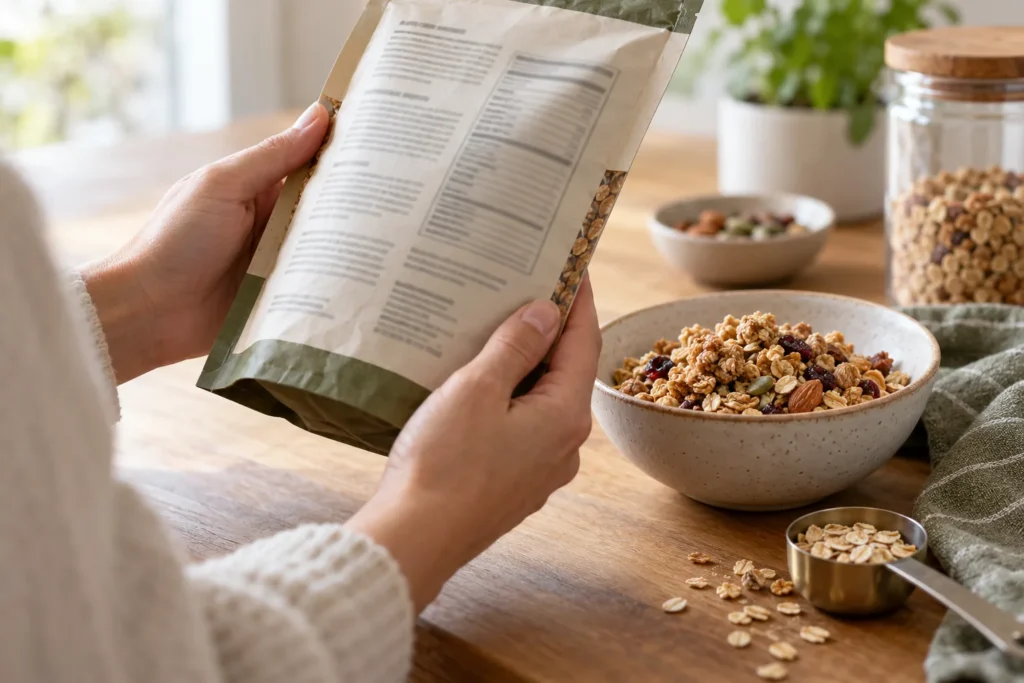
A granola package can tell several stories at once. The front may emphasize an ingredient, a flavor, or a short description of the product. A side panel may supply the ingredient list, nutrition information, storage advice, and the manufacturer’s details. Reading those parts together gives you a more useful picture than choosing one phrase as a complete description.
This matters when an old product page survives after the product itself has changed or disappeared from sale. A historical name can identify a listing without verifying the recipe, package size, or availability today. A good comparison begins with the actual packages you are considering and a clear idea of how you intend to use them.
Begin with the package in front of you
Write down the full product name, flavor, net quantity, and manufacturer before comparing products. Check whether you are looking at a single bag, a multipack, or individually portioned packs. A familiar name on a marketplace page does not guarantee that every photograph and description refers to the same version.
The surviving reference to Upfront Foods Variety Granola (Pack of 12) illustrates the distinction. The legacy URL preserves that product name, and an external article linked to it as a packaging example. The original specification sheet was not recovered. The current reference page therefore does not invent flavors, pouch weights, or nutrition figures to complete the listing.
Apply that approach to your own notes. Record what is visible, separate it from what a seller claims, and leave unavailable details unanswered until you have a reliable source. An empty field is more informative than a confident guess that may belong to another package.
Read the serving information first
The FDA’s guide to the Nutrition Facts label explains how serving size relates to the amounts shown on the panel. Serving size is not a recommendation about how much you should eat. Check both the serving size and the number of servings in a package before interpreting the other figures.
For a practical comparison, look at whether the products use the same basis. Comparing one product’s serving with another product’s entire package answers a different question from comparing similar amounts. Keep the labels beside each other and identify the basis before deciding which numbers are useful to your meal.
Then connect the package to the way you use granola. A small topping on yogurt, a bowl eaten with milk, and a pack carried as a snack may involve different amounts. Record your intended use in your comparison notes. That helps you avoid treating a printed serving as a complete description of your own breakfast.
Use the ingredient list to answer specific questions
Read the complete ingredient list instead of scanning only for the item pictured on the front. If a flavor name interests you, check how the label describes it. If you are looking for or avoiding a particular ingredient, look for the actual declaration rather than assuming the product name settles the question.
Keep a short list of questions that matters to your household. You might want to know whether a product includes nuts, whether an ingredient is suitable for a dietary preference, or whether the package provides the information you need to contact the maker. Questions keep the comparison focused. A long collection of marketing phrases can make two packages seem more different without making either one easier to understand.
The same habit is useful beyond breakfast foods. The archive’s guide to pasta ingredients and vegan choices starts from the ingredient question rather than assuming every product in a familiar category has the same composition. Product categories organize a shelf; ingredient declarations describe particular foods.
Give allergy information its own check
If someone has a food allergy, the comparison needs to address that requirement directly. The FDA advises reading the label each time, because a product’s ingredients can change. A package that was suitable before should not be assumed suitable solely because the name or front design looks familiar.
Keep the original packaging available when food is served to other people. Transferring granola to a plain jar can make a table look tidy while separating the food from information a guest needs. If you use a storage container, retain the identifying details and label rather than expecting everyone to rely on a verbal summary.
When the information is unclear, contact the manufacturer or choose a product whose suitability you can establish. Do not use a historical website photograph as an allergy check. It may show an older formulation, and small print may not be legible even when the photograph itself is genuine.
Read nutrition information in context
The Nutrition Facts panel includes amounts and percent Daily Values that serve different purposes. The FDA explains that percent Daily Value helps show how much a nutrient in a serving contributes to a daily diet. Use the panel as a source of information, not as a single score that can describe every aspect of the food.
Decide which comparison answers your actual question. Someone planning a topping for a meal may be interested in a different aspect of the package from someone choosing a portable snack. An ingredient preference, an allergy requirement, and the amount of food in a multipack are distinct considerations. Keep them on separate lines rather than allowing one favorable detail to stand in for the others.
A useful note can be brief: product identity, comparison basis, ingredients to check, and intended use. You do not need to copy an entire label to remember why you chose a product. You do need enough information to recognize when a different package requires a fresh comparison.
Separate packaging examples from product evidence
A design article may mention a food because its packaging communicates ingredients clearly. That reference can establish what the writer was discussing. It does not necessarily verify a product’s current recipe, health claims, availability, or value. Follow the citation back to its subject and ask what kind of evidence the page actually provides.
For Upfront Foods, the surviving ACS Laboratory packaging article provides that design context. Its broader subject does not turn the linked granola into a different kind of product. It also does not supply the missing contents of the former listing. The reference is useful when its limits stay visible.
Be equally careful with photographs copied between retailers, social posts, and old product pages. Matching a product name is a starting point for checking a picture, not proof that the picture belongs to the package you are about to buy.
Make the final choice for a real use
Once the necessary information is clear, choose a product for the way you plan to serve and store it. Consider whether the package format fits your routine and whether you can keep its identifying label with the food. A multipack is useful only if its actual contents meet your needs; the number of packs alone does not answer that question.
If a product page lacks reliable details, use it as a reference and look for a better source before making a purchase decision. There is no need to turn an incomplete archive into a shopping recommendation. The most useful product page sometimes tells you precisely which details remain unverified.
Browse the food product collection for related reference pages. Carry the same reading method with you: identify the exact product, establish a fair comparison, check the information that matters, and keep historical evidence separate from the contents of a current package.