
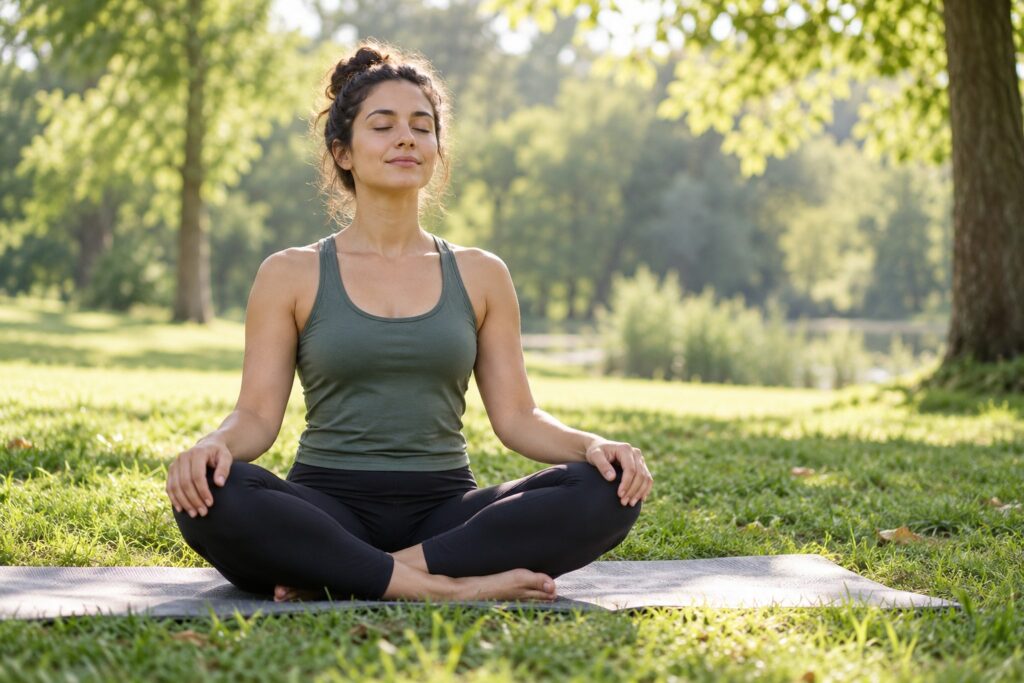
Yoga brings movement, breathing and attention into the same practice. Depending on the style, a class may include gentle stretches, standing postures, seated movement and time for relaxation. The experience can be adapted to different levels of mobility and confidence.
What yoga may offer
The US National Center for Complementary and Integrative Health describes possible benefits for stress, sleep and balance. Results vary between people and styles, and studies do not all use the same methods. A helpful wellness habit is not the same as a treatment that cures a disease.
Finding an approachable practice
A beginner class should make room for questions and alternatives. Tell the instructor if a position feels uncomfortable, and ask about supported or seated options. Progress does not have to mean a deeper stretch or a more difficult pose. A practice that is comfortable enough to return to can be more useful than competing with the person beside you.
Know when to adapt
Some people need modifications because of an injury, pregnancy or a health condition. A qualified instructor can help with technique; a healthcare professional can advise on personal medical limitations. Avoid treating pain as a target to push through. Yoga should complement appropriate medical care.
A place in everyday life
Think of yoga as one part of a wider routine that includes rest, enjoyable movement and regular meals. There is no single pose or schedule that everyone needs to follow. Choose a setting where you can move with attention and ask for help when needed.