
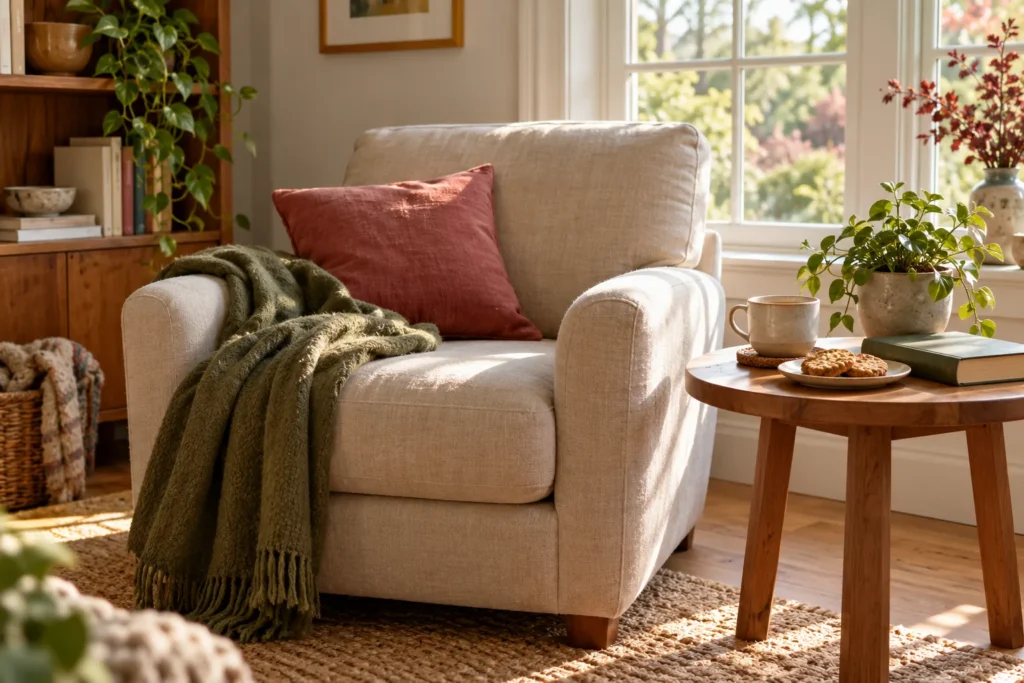
A place to pause does not need to be a separate room. It might be a chair beside a small table, one end of a kitchen bench or a seat near a window. What matters is that it suits the way you want to spend a little unhurried time.
Before buying anything, try the space you already have. Sit down with a book, a cup or the device you normally use. Notice what gets in the way: a table that is too far away, a bright reflection on the screen or nowhere to put a plate.
Choose the activity before arranging the space
A reading corner needs a place to rest a book. A space for music may only need a comfortable seat. If you plan to use a laptop, check whether there is room to set it down securely without balancing it beside a drink. Let the intended activity guide the arrangement.
Keep the setup flexible. The same chair can work for conversation one evening and a personal screen break the next. There is no need to build the whole space around a single device or service.
If the corner also serves as a regular computer workspace, HSE’s guidance on workstation assessment offers a structured way to consider the equipment, furniture and work conditions together.
Give food and drinks their own place
A small side table can make the corner easier to use. Keep drinks on a stable surface, leave room for a plate and avoid putting food on top of books or cables. Bring out one serving instead of carrying a large collection of packages into the space.
If you prefer a packaged snack, the guide to reading a granola label explains how to compare the information in front of you. Use the package itself to check ingredients and serving information rather than assuming that similar-looking products are interchangeable.
When choosing a packaged snack for this space, the FDA’s explanation of serving information can help you read the amounts printed on its Nutrition Facts label. Serving size describes the label’s basis rather than a personal portion recommendation.
Make digital time a deliberate choice
It is easy to open a screen without deciding what you want to do. Choose an activity first: an episode, a puzzle, a short read or a particular online service. That gives the break a purpose and makes it easier to stop when you have finished.
When choosing a platform for your downtime, check its actual content, eligibility requirements, account terms and any costs. Use its name when discussing it with someone else, so they know which destination you mean. If you cannot tell what is being offered, leave it out of your plan until you can.
Keep a screen-free option nearby
A book, a notebook or a small puzzle gives you another choice when a screen does not suit the moment. Choose something you enjoy picking up, rather than something that turns the break into another task. A clear surface with one useful item can feel more inviting than a stack of unfinished projects.
When friends visit, the same corner can become part of a shared evening. The ideas in planning snacks and space for a relaxed game night can help you keep refreshments within reach while leaving room for the activity.
Reset it in a minute
Take away the plate, put the book back and leave the seat ready for next time. If tidying the corner becomes a substantial job, remove a few things. A useful space for downtime should be simple enough to enjoy on an ordinary evening.